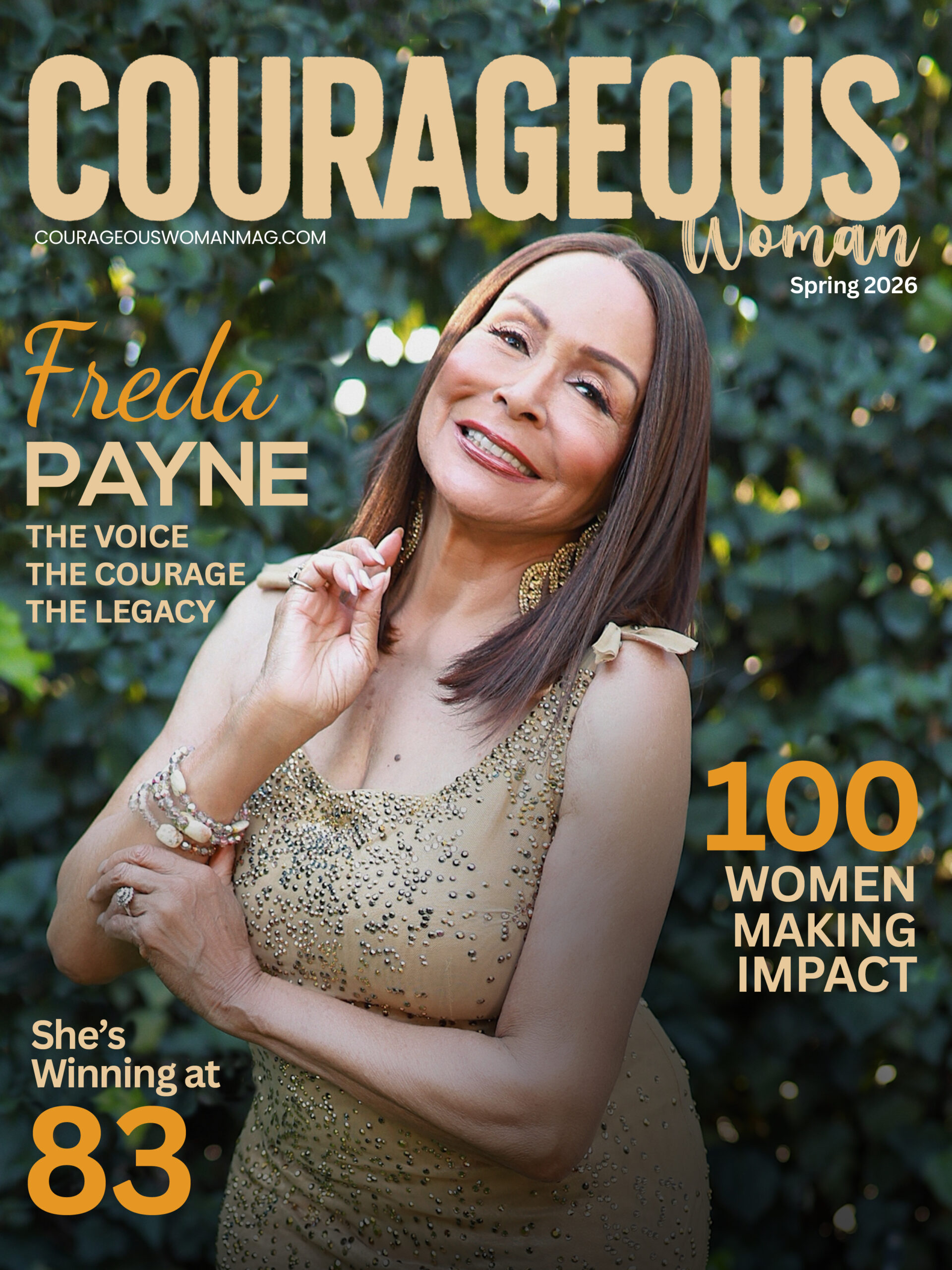
There are voices that define an era — and then there are women who define themselves beyond the era.
When you hear the name Freda Payne, you may instantly think of the global hit “Band of Gold.” But behind the chart-topping success is a woman shaped by Detroit grit, maternal strength, private insecurities, artistic reinvention, and a relentless refusal to quit.
In this powerful and intimate conversation, I sit down with the legendary songstress to explore the woman behind the music — the daughter who honored her mother, the sister who championed family, the artist who pivoted before the industry demanded it, and the introvert who transformed doubt into discipline.
This is not just a story about fame.
It is a story about courage, evolution, and the quiet strength it takes to keep pushing when no one sees the struggle.
Welcome to a Courageous Conversation with Freda Payne.
When people talk about legends, they often celebrate the spotlight — but rarely the beginning. In this exclusive Q&A, I sit down with the incomparable Freda Payne to explore the woman behind the music, the courage behind the career, and the legacy behind the legend.
When people talk about legends, they often forget where the story begins. Tell us about your backstory. Where did it all begin?
I’m from Detroit — the Big D. I was born and raised there. When I turned 18, I decided I wanted to leave Detroit and seek my fame and fortune, so I went to New York. Back then, if you were serious about show business, New York was the place to go.
Before that, I had already been singing in Detroit. I was on a radio show called Make Way for Youth on WJR when I was about 13 or 14. And believe it or not, I was Barry Gordy Jr.’s first female protégé. He wrote four songs for me when I was just 14 — and that was before Motown even existed.
Growing up in Detroit surrounded by music and discipline, what shaped you as a woman — not just an artist?
My mother. She was my greatest influence. The fact that she allowed me to move to New York at 18 says everything. She supported me, made sure I had what I needed.
Later, when I performed in Europe and Japan, I always brought her with me. She got to see Paris, Tokyo — beautiful places. She had breast cancer in the 1970s, and there was no cure back then. She passed in 1977, but I’m grateful I could give her those experiences before she died.
How did you learn to trust your own voice in an industry that often defines women before they define themselves?
Honestly, I didn’t always believe in myself. When I was younger and heard my voice on tape, I didn’t think I sounded that good. I doubted myself.
But people encouraged me. Friends would say, “Girl, you’re good.” It’s a good thing I listened, because I didn’t think I was all that at first.
At 83, you continue to carry yourself with elegance, energy, and purpose. What are some of the habits or practices that help you take care of yourself and stay vibrant at this stage of life?
At this stage of my life, I believe the key to staying vibrant is taking care of both your body and your spirit through consistent habits. I try to maintain a healthy, balanced diet that includes fish, meats, vegetables, and foods I enjoy, like sashimi and sushi. I also take a number of supplements and work with a doctor in Santa Monica, Dr. Stephen Smalls, who analyzes my DNA using specialized technology to determine exactly which vitamins and minerals my body needs. Since everyone’s body is different, I believe it’s important to understand what works specifically for you.
Staying active is just as important. I belong to LA Fitness, where I work out with a trainer, and I also enjoy walking regularly—especially walking my dog in the mornings. I do a bit of yoga for stretching and flexibility as well. My philosophy is simple: as you get older, you have to keep moving and avoid becoming stagnant. Movement, good nutrition, and paying attention to what your body needs all help me maintain my energy and continue doing the things I love.
What truth would you want the next generation of women to carry with them as they pursue their dreams?
One truth I would want the next generation of women to carry with them is the importance of independence and self-confidence. Women today have opportunities that earlier generations could only dream of, and it’s important to honor that progress by standing strong and believing in your own abilities. I’ve always believed that women should be capable of taking care of themselves—being responsible with their finances, making wise decisions, and building lives that reflect their own goals and aspirations.
I also believe women should trust their discernment and intuition. Women often have a deep inner wisdom that helps guide them through life, and learning to listen to that voice is powerful. When women combine independence, intelligence, and strong instincts, they can pursue their dreams with confidence and help shape a better future for themselves and for those who come after them.
When Band of Gold became a global hit, what did that moment give you — and what did it take away?
It gave me confidence. I had been singing and traveling for eight years before Band of Gold. So when it became a hit, it felt like confirmation — like God was saying, “You’re on the right track.”
It didn’t take anything away from me. It gave me the push to keep going.
When you recorded “Bring the Boys Home” during the Vietnam War, what responsibility did you feel using your voice in such a turbulent time?
It all worked together. America was at war. I knew young men who went to Vietnam — some didn’t come back. That song came after the success of Band of Gold, and the label wanted another hit.
It was written by Greg Perry and Angelo Bonds and produced by Holland-Dozier-Holland. The timing matched what the country was experiencing. It wasn’t planned activism — it was aligned with the moment.
Your career shows a woman who pivoted before pivoting was trendy. How did you navigate seasons when the industry shifted?
Like a mouse — when one hole closes, find another one.
When my recording hits slowed down, I turned to theater. I performed in Sophisticated Ladies, playing the Phyllis Hyman role. Later, I portrayed Ella Fitzgerald in Ella Fitzgerald: First Lady of Song. That became my segue into more jazz.
I can scat — and that musicality helped me transition. So I simply moved into another lane.
Courageous Woman is all about sisterhood. How has sisterhood sustained you?
My sister, Scherrie Payne, is a singer and performer — very talented. She joined The Supremes and is a prolific songwriter and playwright. She’s two years younger than me.
She was the smart one in school — straight A’s. I was average! But God had a mission for me. We’ve supported each other through the years.
What challenges have you faced privately that the public never saw?
My shyness. My insecurities. Not thinking I was good enough.
That’s what pushed me to improve — studying makeup, taking ballet, learning how to move on stage. I didn’t want to just stand there and sing.
I’m very private and introverted. Sometimes people mistake that for being snooty, but it’s just my nature. Aretha Franklin was similar — she had a wall up too. We were both from Detroit, around the same age, and knew many of the same people.
What truth would you want the next generation of women to carry with them as they pursue their dreams?
Keep pushing. Never give up. Don’t drop the ball, pick the ball up, and run with it.
If it falls, pick it up and run with it. Don’t decide you’ve gone as far as you can go. There’s always more ahead.
What legacy do you want to leave behind?
Most people think of me and say, “Band of Gold.” But I’m more than that. I’m a mother. I married Gregory Abbott in 1976. We had a son — Gregory Abbott Jr. The marriage didn’t last, but my son did. He’s 48 now.
I want people to know I’m more than one song. I’m a woman who lived, loved, and persevered.
As we closed our conversation, she smiled and said:
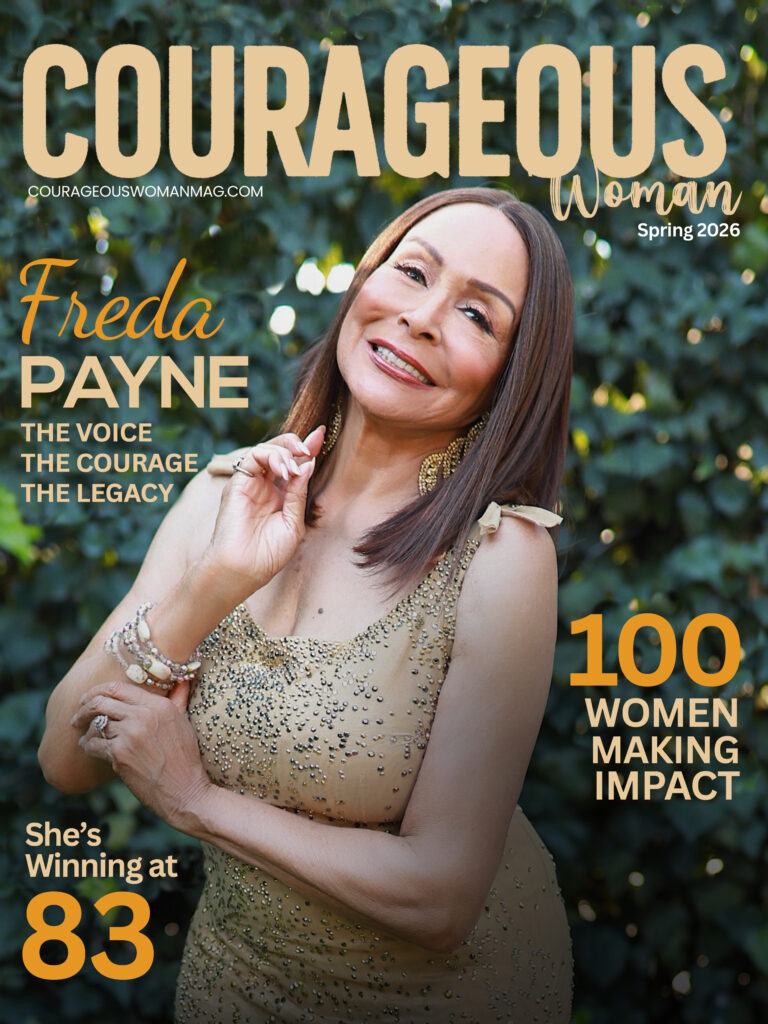
“It’s an honor and a privilege to grace the cover of Courageous Woman Magazine.
Legends are often remembered for their biggest hit. But courageous women are remembered for their resilience.
Freda Payne’s journey reminds us that success is not a straight line. It is reinvention. It is persistence. It is finding another door when one closes. It is pushing past insecurity. It is honoring where you came from while boldly stepping into what’s next.
She is more than a song.
More than a decade.
More than a moment in music history.
She is a mother. A sister. A pioneer. A woman who kept the ball in motion — even when it dropped.
And as she so beautifully declared:
“I’m Freda Payne — and I am a Courageous Woman.”
And that is the legacy.