An Award-Winning Film Challenges Us to See Black Boys, Fathers and Families Differently
Some films entertain you. Others stay with you long after the final scene.
A Boy Named Bobby did both for me.
I had the opportunity to experience the film during the XL Film Festival in Chicago, with the screening held at the Obama Presidential Center. Seeing this story unfold on the big screen was emotional and one of the highlights of my time at the festival.
From the writing and directing to the performances and moving musical score, A Boy Named Bobby delivered.
Five stars from me.
It was heartfelt, thought-provoking, and absolutely a tearjerker. But beneath the emotion is something even more powerful: a story that asks us to reconsider how quickly we judge young people without knowing the circumstances, pain, and experiences that came before the moment we chose to define them by.
Written and directed by Adedapo Akisanya, A Boy Named Bobby explores the foster care system, the criminal justice system, and the disconnection between Black men and boys through a deeply human story of relationships, redemption, and healing.
SEEING BEYOND THE MISTAKES
For Akisanya, the inspiration is personal.
His years working with adolescent boys in the community and serving as a school counselor and dean taught him something that became foundational to the film.
“Young people are far greater than their mistakes or the way society perceives them.”
“I wanted to honor that truth through a story that also reflected my own personal journey,” Akisanya says.
Interestingly, he didn’t begin with the goal of creating an “important” film.
“I wanted to tell a truthful story, not necessarily an important one. I created authentic characters who reflected our experiences, thoughts, and realities. I believe that honesty is what ultimately made the story feel important.”
That honesty is one of the film’s greatest strengths.
A Boy Named Bobby doesn’t simply ask us to look at what someone has done. It challenges us to consider what happened to them, who failed them, who loved them, and who might have reached them if given the opportunity.
“Judgment is powerful, but when we know someone’s full story, empathy can slow our rush to judgment,” Akisanya says.
CONNECTION BEFORE CORRECTION
The screenplay evolved through several rewrites over many years. Akisanya admits that initially the message overshadowed the characters. Eventually, he realized the relationships needed to become the heart of the story.
His work as an educator helped him understand why.
“Through my work as an educator, I discovered that connection can reach young people more deeply than discipline, policy or authority.”
That philosophy became part of the foundation of A Boy Named Bobby.
The film also opens the door to a larger conversation about Black men, boys, fathers and families. Akisanya isn’t pretending that one film can provide all the answers. What he hopes it can do is get people talking.
“We need to have courageous conversations again, even if they do not begin with anything profound. Depth develops through consistency.”
WHEN MUSIC BECOMES ANOTHER CHARACTER
One element that immediately stood out to me was the music.
Composer Rob “Diggy” Morrison didn’t simply put music underneath the scenes. His score became part of the emotional storytelling.
Morrison is a Grammy-recognized composer and arranger whose credits include contributing to Beyoncé’s Grammy Award-winning remix of “Crazy in Love.” His television scoring work includes Seasons 4, 5, and 6 of BET+’s The Family Business, with his music reaching audiences across Netflix, Tubi, Apple TV, Amazon Prime, Paramount Plus, NBC, and PBS.
Akisanya’s description of their collaboration explains why the music feels so connected to the film.
“Rob is incredibly talented. During our first session, we discussed the film and what he believed it was trying to say. I asked him to tell a story through the music, with a beginning, middle and end that paralleled the film.”
By their second session, Akisanya knew Morrison had captured it.
“During our second session, I heard that story come alive. I was thrilled by what he created. He is brilliant.”
I couldn’t agree more.
The music knows when to speak and when to allow the performances to breathe. During some of the film’s most emotional moments, the score doesn’t simply tell us what to feel. It helps us experience what the characters cannot always put into words.
FROM CHICAGO TO CANNES
Experiencing A Boy Named Bobby during the XL Film Festival at the Obama Presidential Center in Chicago also reminded me of the importance of film festivals and independent media platforms. They provide spaces where stories that deserve to be seen can connect with audiences, spark conversations, and potentially reach much larger stages.
A Boy Named Bobby is already receiving international recognition.
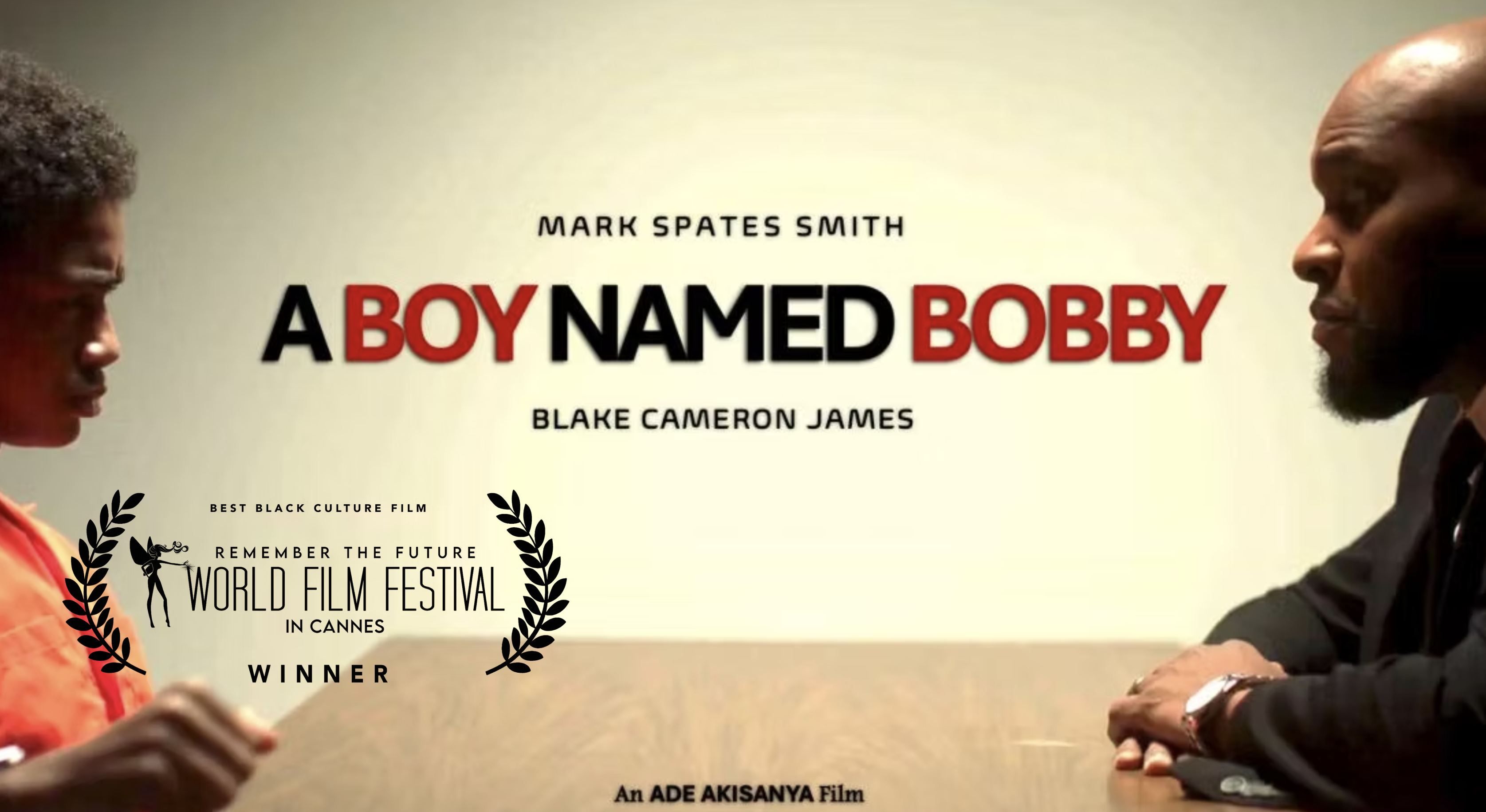
The film won Best Black Culture Film at the World Film Festival in Cannes, an especially meaningful honor for Akisanya.
“Independent filmmaking is difficult and rarely financially rewarding,” he says. “Winning Best Black Culture Film at the World Film Festival in Cannes was especially gratifying because the film addresses subject matter that is not always considered commercially appealing.”
For Akisanya, the recognition affirmed something even bigger.
“Stories centered on Black families, pain, healing and humanity can resonate far beyond the communities they portray.”
A STORY READY FOR A LARGER AUDIENCE
Now A Boy Named Bobby is entering another important chapter.
The filmmakers are actively seeking distribution, with the goal of finding a home on a television network or streaming platform capable of bringing the story to audiences around the world.
I hope they find it.
After experiencing this film, I don’t believe Bobby’s story should stop with film festivals and special screenings.
There are young men who need to see themselves as more than their worst decision. Some fathers may recognize something of themselves in this story. There are educators, mentors, and community leaders who may reconsider the difference between simply correcting a young person and truly connecting with one.
And some audiences simply deserve the opportunity to experience a beautifully told story.
Akisanya hopes the film ultimately raises awareness about the importance of Black men and boys connecting and strengthening Black families and communities. He also hopes the film demonstrates that meaningful stories can be both socially relevant and entertaining to broad audiences.
“Hopefully, someone sees the film and feels moved to act,” he says.
His next words beautifully capture what A Boy Named Bobby represents:
“Life inspires art, and art can inspire life.”
After experiencing A Boy Named Bobby, I believe this is one of those films with the potential to do exactly that.
★★★★★
LEARN MORE ABOUT A BOY NAMED BOBBY
A Boy Named Bobby is an award-winning film written and directed by Adedapo Akisanya and produced through Elevate Creative Group.
Official Film Website:
A-Boy-Named-Bobby.com
Elevate Creative Group:
ElevateCreativeGrp.com
Adedapo Akisanya:
IMDb Profile Available
Currently Seeking Distribution
The filmmakers are seeking television, streaming, and distribution opportunities to bring A Boy Named Bobby to audiences worldwide.